China Top 10 Charging Systems What Role Does Software Play?

Time:2026-10-18 Author:Sienna
0%

China’s charging market is no longer defined by plug counts alone. By the end of 2024, China had approximately 12.8 million charging facilities, according to the National Energy Administration. Public charging points exceeded 3.5 million. The International Energy Agency also reports that China holds more than half of the world’s public charging infrastructure. These figures show scale, but scale does not guarantee a smooth charging experience.

This is where the question “what role does software play in charging systems” becomes essential. Software connects chargers, vehicles, payment platforms, electricity markets, and maintenance teams. It can reduce queue times, balance power across a busy depot, and identify a failing connector before drivers arrive. It also supports remote updates, roaming access, dynamic pricing, and carbon-aware charging. In practical terms, a driver should see an available charger, start a session, and receive an accurate bill without touching three different applications.

Jigar Shah, former director of the U.S. Department of Energy’s Loan Programs Office, has emphasized, “The grid is the largest machine ever built.” That idea applies directly to charging software. Intelligent platforms must coordinate vehicles with this massive machine, not operate as isolated payment tools. Industry reports from BloombergNEF and the China Electric Vehicle Charging Infrastructure Promotion Alliance reinforce this shift toward integrated energy services. Still, the industry has weaknesses. Fragmented standards, unreliable data, and inconsistent user interfaces remain common. Our review of China’s top ten charging systems examines their software depth, operational resilience, compatibility, and real-world usability. The best system may not be the fastest. It may be the one that fails less often.
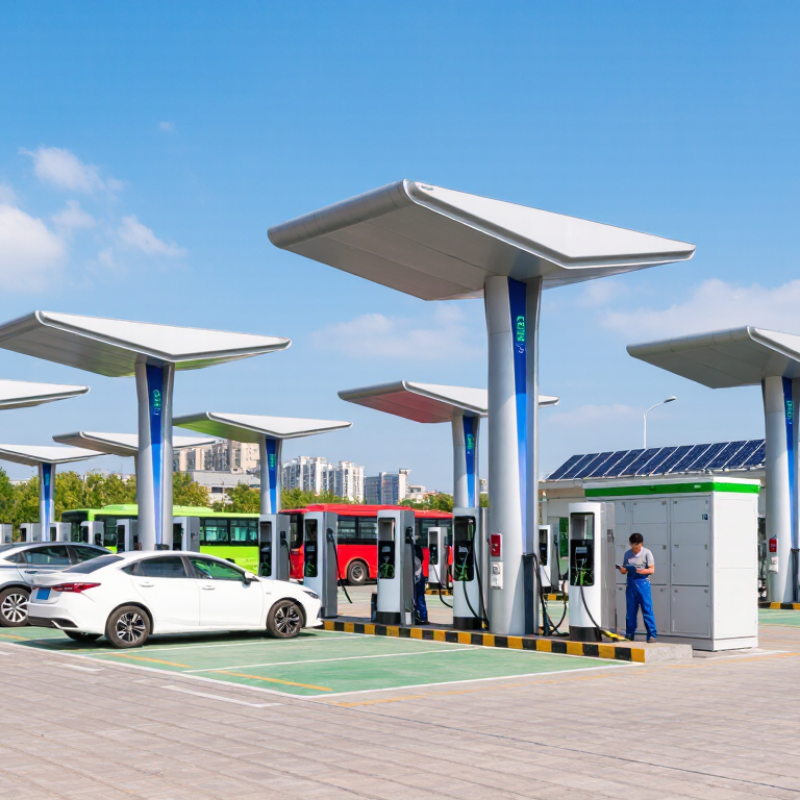
China Top 10 Charging Systems What Role Does Software Play?

What Defines China’s Top Ten Charging Systems?

China’s top ten charging systems are defined by more than charging speed. They combine dependable hardware, intelligent software, and measurable service quality. The International Energy Agency’s Global EV Outlook 2024 reported that China held more than half of the world’s public charging points in 2023. National industry data also recorded about 2.7 million public charging points by year-end.

The strongest systems balance uptime, payment access, load management, and user safety. Software monitors connector faults, predicts demand, and adjusts charging power during peak periods. It also supports remote diagnosis, which reduces unnecessary technician visits. In real operation, a charger beside a busy highway needs different software from one in a residential garage. One serves rapid turnover. The other must protect local grid capacity. A high charger count alone can mislead. Some installations remain underused, poorly maintained, or difficult to access. This is where transparent performance data matters.

Tips: Check uptime, average repair time, charging consistency, and platform compatibility. Ask for evidence, not promises. Independent testing and verified operating records build stronger trust. The China Electric Vehicle Charging Infrastructure Promotion Alliance’s monthly statistics can help compare infrastructure growth, but users should still examine local conditions. Software remains important, yet it is not magic. Weak network coverage, unclear pricing, and inaccurate location data can still damage the experience. Better systems learn from these failures.

How the Ten Charging Systems Differ in Design and Use

China’s ten leading charging systems differ mainly in structure, power delivery, and operating environment. Home AC units usually prioritize safety, low noise, and simple installation. Public AC stations serve longer parking periods, often near offices or apartment buildings. DC fast chargers use larger power modules and thicker cables, reducing charging time but increasing heat and infrastructure demands. High-power systems need careful cooling and stable grid connections. Portable chargers remain useful for emergencies and rural travel, although their output is limited.

Fleet charging systems are designed around schedules rather than individual drivers. Software assigns vehicles to chargers, balances electricity loads, and records energy use. Battery-swapping systems take a different approach by replacing a depleted battery instead of charging it inside the vehicle. Shared charging hubs may combine several designs, including parking sensors, payment controls, and remote fault alerts.

The hardware looks similar from a distance. Its purpose is not the same.

Software connects these systems to real operating conditions. It can slow charging during peak demand, reserve a connector, and detect unusual temperature changes. Drivers see a simpler interface, while operators manage queues, maintenance, and electricity costs. Reliability still depends on cables, cooling fans, meters, and local networks. Software cannot repair a damaged connector. I would not call one system universally superior. A quiet home unit may suit a private garage but fail in a busy taxi depot. Field testing remains essential, because published specifications rarely describe rain, dust, winter mornings, or crowded parking spaces accurately.

Which Software Functions Power Modern Charging Networks?

Modern charging networks depend on software as much as hardware. The International Energy Agency reported more than 4 million public charging points worldwide at the end of 2023. Over 1.3 million were added that year, a rise above 40 percent. Each connector creates live data: location, energy flow, pricing, faults, and waiting time. Software turns these signals into an operating system for the network.

A reliable platform starts with device management. It uses open communication protocols to authorize sessions, update firmware, and detect a failed cable before drivers arrive. Dynamic load management is equally important. It can reduce power during a building’s peak period, then restore output when demand falls. The IEA’s Global EV Outlook 2024 identifies smart charging as an important grid flexibility tool. Small details matter. A clear screen. A receipt in seconds. Accurate availability.

Payment orchestration, roaming, fleet scheduling, and predictive maintenance shape daily performance. U.S. Department of Energy charging data also shows why transparent station information matters for planners. Yet software is not flawless. A charger may appear online while its payment reader fails. Forecasts can miss holiday traffic or a cold morning. Operators need audit logs, human support, cybersecurity testing, and honest uptime reporting. I still see one weakness: many dashboards measure connected chargers, not successful charging sessions. That distinction deserves more attention.

China’s Top 10 Charging Systems: What Role Does Software Play?

Software functions specified by major open charging protocol versions used in modern EV charging networks.

Software connects charging hardware with operators, vehicles, payment services and grid-management platforms. The chart compares native capability coverage in OCPP 1.6 and OCPP 2.0.1. A value of 1 means the function is explicitly supported by the protocol version; 0 means it is not natively specified. OCPP 2.0.1 adds stronger device management, security and ISO 15118-related support, helping networks improve interoperability, automation and remote operations.

Source basis: Open Charge Alliance OCPP specifications, IEC 61851 and ISO 15118 standards. Protocol support does not represent market adoption.

How Software Improves Charging Speed, Access, and Reliability

China Top 10 Charging Systems: What Role Does Software Play?

How Software Improves Charging Speed, Access, and Reliability

In China’s busy charging network, software often determines how quickly a vehicle receives power. It monitors battery conditions, station temperature, and grid capacity in real time. The system then adjusts current to protect equipment and reduce unnecessary waiting. At a crowded urban site, intelligent load balancing can share electricity across several vehicles. This prevents one car from taking too much power while others remain idle.

Access also depends on software design. Drivers can locate available chargers, check connector status, and receive payment confirmation through connected platforms. Clear instructions reduce failed charging sessions, especially in apartment garages and roadside stations. Remote identity checks can limit unauthorized use without creating complicated steps. However, convenience should not replace reliability. A map may show an available charger that becomes occupied seconds later.

Operational software supports technicians as well. It records voltage changes, connector errors, and repeated payment failures. Maintenance teams can identify patterns before a minor fault becomes a long outage. Firmware updates may improve charging control, but poorly tested updates can create new problems. No platform is flawless. A healthy dashboard can still hide a damaged cable or unstable network connection. Field inspections remain essential, particularly during extreme heat or heavy rain. The strongest systems combine accurate data, careful testing, and human judgment.

What Is Next for China’s Charging System Software?

China’s next charging system software will move beyond simple payment and session control. It will coordinate vehicles, chargers, batteries, and local power networks in real time. At 7:40 p.m., a city station may face a sudden queue, rising electricity demand, and several vehicles with different charging limits. Better software can assign suitable connectors, estimate waiting times, and reduce unnecessary power peaks.

Data quality will become decisive. Software should compare charger temperature, voltage stability, payment records, and repair history. A small dashboard warning may prevent a longer outage later. Predictive maintenance can identify a cooling fan that is weakening before drivers notice slower charging. However, automated predictions are not always correct. A dirty sensor can resemble a battery fault. Human technicians still need to verify unusual alerts.

Interoperability will also shape the market. Drivers expect one digital process across public, residential, and highway charging locations. Open data standards can reduce repeated registration and improve route planning. Privacy controls must limit unnecessary collection of location and vehicle information. Cybersecurity testing should cover firmware updates, user accounts, and remote operating commands. The strongest platforms will explain their decisions clearly, especially when they delay a session or change its power level. Yet software teams may still overlook rural connectivity, older chargers, or users with limited digital skills. That gap deserves practical testing, not optimistic predictions.

China Top 10 Charging Systems: What Role Does Software Play?
What Is Next for China’s Charging System Software?
No. Charging System Category Typical Power Range Primary Use Case in China Current Software Role Key Operating Data Next Software Priority
1 Public AC Charging 3.3–22 kW per connector Urban parking areas, residential compounds and commercial car parks User authentication, connector status, reservations, billing, fault alerts and remote restart Connector availability, session duration, energy delivered and utilization rate Predictive maintenance, dynamic pricing and automated load balancing across buildings
2 Public DC Fast Charging 60–250 kW per connector City charging hubs, roadside facilities and retail destinations Queue management, charging-plan control, payment settlement and charger monitoring Peak power, charging time, successful-session rate and equipment uptime Real-time congestion prediction, intelligent queue allocation and service-level monitoring
3 High-Power Charging 250–600+ kW per connector Expressway corridors, intercity travel and high-turnover charging stations Power-allocation control, thermal-status monitoring, authentication and session optimization Charging curve, maximum delivered power, cooling status and turnaround time Vehicle-aware power scheduling, thermal prediction and coordinated site-energy control
4 Residential Private Charging 3.3–11 kW per charger Private parking spaces, apartment buildings and individual homes User authorization, scheduled charging, household load protection and electricity-cost reporting Daily energy use, charging schedule, household peak load and fault frequency Automated off-peak charging, transformer-capacity coordination and home energy integration
5 Destination Charging 7–22 kW per connector Workplaces, hotels, shopping centers, hospitals and public institutions Parking validation, access control, time-based pricing and facility-management integration Dwell time, energy per vehicle, occupancy and charger-to-parking-space ratio Integrated parking-and-charging reservations with demand forecasting
6 Fleet Depot Charging 60–480 kW per vehicle connection Logistics fleets, ride-hailing fleets, municipal vehicles and corporate transport Vehicle scheduling, route-based charging, depot power management and energy-cost control Vehicle readiness, departure compliance, energy cost per kilometer and depot utilization AI-based fleet scheduling, battery-health forecasting and total-cost optimization
7 Electric Bus Charging 120–600 kW per vehicle connection Bus depots, terminal stations and scheduled public-transport routes Timetable-linked charging, depot sequencing, demand management and operational reporting Route readiness, departure punctuality, energy consumption per route and charger availability Integrated transit-and-energy optimization with battery degradation awareness
8 Taxi and Ride-Hailing Charging 60–180 kW per connector High-volume urban charging hubs with short vehicle dwell times Digital queuing, driver identification, priority allocation and rapid-payment processing Waiting time, sessions per connector, energy per session and driver throughput Demand prediction based on traffic, weather, events and real-time vehicle distribution
9 Battery-Swapping System Automated exchange; site input commonly ranges from approximately 100 kW to 1 MW High-utilization fleets and vehicles requiring rapid energy replenishment Battery identity, inventory control, safety checks, reservation management and lifecycle tracking Exchange time, battery inventory, state of charge, temperature and cycle count Interoperable battery records, standardized diagnostics and optimized battery inventory
10 Vehicle-to-Grid and Bidirectional Charging Approximately 7–22 kW for AC and 20–150 kW for DC applications Pilot projects, managed fleets, renewable-energy sites and distribution-grid support Bidirectional power control, user consent, tariff calculation, aggregation and grid-service settlement Available flexibility, exported energy, battery impact, response time and financial return Secure aggregation, battery-life-aware dispatch and automated participation in electricity markets
Data note: Power ranges are representative operating ranges for common charging applications in China rather than market-share figures. The software functions and future priorities are based on the operating requirements of conductive charging systems, charging-network management, fleet scheduling, energy management and bidirectional charging. Relevant technical foundations include the GB/T 20234 charging-connection series, GB/T 27930 communication requirements and GB/T 18487.1 conductive charging requirements.

FAQS

What software functions support modern charging networks?

Device management authorizes sessions, updates firmware, and detects equipment faults remotely. Payment, roaming, scheduling, and maintenance tools support daily operations.

How does smart load management improve charging?

It lowers power during building peaks and restores output when demand falls. At a crowded site, it shares electricity among vehicles. This reduces queues, but not always.

How can drivers find reliable charger information?

Connected platforms show locations, connector status, estimated availability, and payment confirmation. A clear screen and receipt can prevent confusion. Availability can change within seconds.

Can software make charging faster?

It monitors battery conditions, station temperature, and grid capacity in real time. Then it adjusts current to protect equipment and reduce unnecessary waiting. Faster is not guaranteed.

How does software help maintenance teams?

It records voltage changes, connector errors, payment failures, and repair history. Repeated warnings can reveal a weakening cooling fan before a long outage. Field inspections remain necessary.

What problems can charging software still miss?

A charger may appear online while its payment reader or cable has failed. A dirty sensor may resemble a battery fault. Dashboards can look healthy. That weakness matters.

What changes are expected in future charging software?

Systems may assign suitable connectors, estimate queues, and coordinate chargers with local power networks. At 7:40 p.m., this could reduce sudden power peaks.

How should future platforms protect users and improve access?

They should use open data standards, limit unnecessary location collection, and test remote commands carefully. Designers must include rural areas, older chargers, and users with limited digital skills. This gap deserves honest testing.

Conclusion

China’s top ten charging systems can be understood as leading models that combine different power levels, connection methods, installation settings, and user needs. Some are designed for homes and workplaces, while others support public facilities, long-distance travel, fleet operations, or high-demand urban areas. Their differences appear in charging speed, equipment structure, compatibility, payment access, safety controls, and the ability to coordinate with local electricity supply. Together, these systems show how charging infrastructure is becoming more flexible, connected, and responsive.

The key question is: what role does software play in charging systems? Software manages user authentication, scheduling, pricing, remote monitoring, fault alerts, load balancing, and energy management. It can direct power where it is needed, reduce waiting times, improve equipment availability, and help operators identify problems before they interrupt service. By connecting chargers, vehicles, users, and energy networks, software improves reliability and convenience. Future development will likely focus on intelligent prediction, stronger data protection, automated maintenance, renewable-energy coordination, and seamless access across different charging networks.

Sienna

Sienna

Sienna is a skilled marketing professional with a deep expertise in our company’s core products and services. With a passion for innovation and detail, she plays a pivotal role in crafting insightful blog posts that not only highlight the unique features of our offerings but also provide valuable......