How to Integrate Renewable Energy with EV Charging Systems

Time:2026-11-11 Author:Mason
0%

Renewable energy can make electric-vehicle charging cleaner, but the connection is not automatic. A rooftop solar array may peak at noon, while many cars arrive after sunset. That mismatch makes storage, smart controls, and reliable operating data important. International Energy Agency Executive Director Fatih Birol called solar “the new king of electricity markets around the world.” His remark describes solar’s growing role, not a complete EV-charging recipe. The practical work starts at the site. Operators must match generation, grid capacity, charger demand, and driver routines. Small details matter. A shaded canopy, a busy parking lot, or an undersized transformer can change the design. This guide explores how to integrate renewable energy with charging systems, from solar and wind sourcing to battery storage and managed charging.

Readers will learn how to assess local renewable resources, estimate charging loads, and choose an approach suited to each location. It also examines energy-management software, grid connections, backup needs, and the measures used to track performance. Not every site needs a battery. And a sunny location is not automatically a good project. Forecasts can be wrong; driver behavior changes. Those limits deserve attention, not gloss. The following sections offer practical decision points while recognizing that costs, available space, and utility conditions vary. The goal is a charging system that uses cleaner power when it is available, meets drivers’ needs, and makes its trade-offs visible.
How to Integrate Renewable Energy with EV Charging Systems

Assess EV Loads Against Renewables’ 30% Share of Global Power in 2023 (IEA)

How to Integrate Renewable Energy with EV Charging Systems

Renewable electricity supplied about 30% of global power in 2023, according to the International Energy Agency (IEA). In the same year, electric cars used roughly 130 terawatt-hours of electricity worldwide, or around 0.5% of global electricity consumption, as reported in the IEA’s Global EV Outlook 2024. These figures show that today’s EV demand is modest globally, but growing quickly. A global share does not tell a charging-site operator whether local supply can meet a busy evening peak.

At a workplace car park, solar panels may generate most power around midday, while vehicles arrive later. The mismatch matters more than the annual percentages. Compare hourly charging demand with local renewable output, then assess storage, flexible charging, and grid imports. A site with a high renewable share can still draw substantial grid power at certain hours. I would not treat the 30% figure as a ready-made sizing rule; it is context, not a forecast for any one site.

Tips: Start with interval meter data and charging schedules. Shift flexible charging toward sunny or windy hours, and check winter output separately. Small gaps in the data can distort a tidy plan.

Integrating Renewable Energy with EV Charging Systems

Assessing EV electricity use against renewables’ 30% share of global power in 2023

Renewables generated about 30% of global electricity in 2023. Electric vehicles used around 130 TWh—approximately 0.5% of global electricity consumption. Coordinating charging with periods of high renewable output can help align EV demand with cleaner electricity. The figures use different denominators: generation for renewables and consumption for EVs.

Sources: IEA, Global Energy Review 2024; IEA, Global EV Outlook 2024.

Select On-Site Solar and Wind as Renewable Additions Reach 510 GW (IEA, 2023)

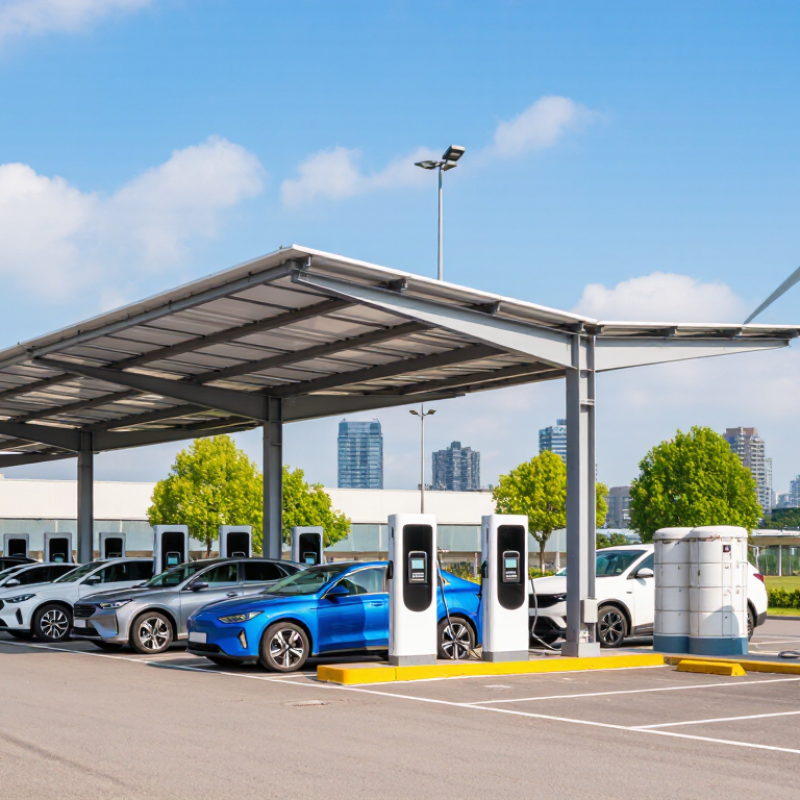
The International Energy Agency’s Renewables 2023 report estimated that global renewable capacity additions reached nearly 510 GW that year, about 50% above 2022. Solar photovoltaic power supplied roughly three-quarters of the increase. For an EV charging site, this growth makes on-site solar a practical option, especially where cars sit beneath canopies during daylight hours. Wind can complement solar, but only where local wind measurements support a reliable yield. A turbine that looks impressive on a drawing may perform poorly behind nearby buildings. Site data matters.

Pair generation with charging schedules. In its Global EV Outlook 2024, the IEA reported about 3.3 million public charging points worldwide in 2023, a 40% year-on-year increase. More chargers can mean sharper peaks in site demand. Smart charging can shift flexible sessions toward sunny hours, while batteries can store surplus power for evening arrivals. Grid limits matter. A useful design starts with hourly solar and wind output, vehicle arrival patterns, and connection capacity—not annual averages alone. Some sites will still import power during cloudy, windless periods. That is not a design failure, but it should be stated plainly in forecasts.

Coordinate Smart Charging Across More Than 4 Million Public Chargers (IEA, 2023)

More than four million public chargers create a coordination challenge, not just a construction milestone. Each charger draws power from a local grid with its own limits and renewable supply. Smart charging can shift flexible sessions toward hours when solar or wind is abundant. It can also ease demand when a neighborhood transformer is already busy.

Consider a row of chargers beside a commuter car park. A charging system can use solar forecasts and live site data to favor midday charging, while preserving the departure times drivers set. On a windy night, it may schedule more charging later, if grid capacity allows. Small changes matter. Charging should not be delayed blindly; drivers still need enough energy when they leave. Public chargers also differ in their ability to share data or respond to signals, so coordination will not be seamless everywhere.

Operators can begin with clear measures: record energy use by hour, compare charging demand with renewable output, and flag sessions that could safely shift. Grid operators and site managers need reliable forecasts and agreed limits. The weak spot is often mundane: missing data, outdated equipment, or a forecast that misses a sudden cloudbank. Better coordination helps, but it cannot make every location renewable-powered at every moment.

Pair Charging with Storage as Battery Additions Reach 42 GW (IEA, 2023)

Battery storage can make renewable-powered EV charging more dependable, not merely greener on paper. The IEA’s Batteries and Secure Energy Transitions report says power-sector battery additions reached about 42 GW in 2023, a 130% increase from 2022. Ember’s Global Electricity Review 2024 reports that wind and solar supplied 13.4% of global electricity in 2023. Their output varies by hour, while drivers often plug in after work. Timing matters.

At a workplace or depot, charging controls can favor midday solar and reduce demand during evening peaks. A site battery can store surplus generation, then support chargers when sunlight fades or several vehicles arrive together. Operators should monitor actual charging schedules, transformer limits, and battery efficiency; a dashboard forecast is not the same as measured performance.

I would not assume storage always pays for itself. Local tariffs, equipment costs, and cloudy weeks can change the calculation.

Not automatic. Start with interval meter data, then test a small set of chargers against real solar output and vehicle dwell times.

A less tidy detail: charging every vehicle immediately may feel convenient, but it can erase the benefit of coordinating energy use.

FAQS

How much electricity did electric cars use globally in 2023?

Electric cars used roughly 130 terawatt-hours, or about 0.5% of global electricity. Renewable sources supplied about 30% of global power. Globally, that is modest.

Can the global renewable share size a local charging site?

No. A workplace may generate solar power at noon, while most cars arrive after work. Compare hourly demand with local generation and grid capacity.

How can on-site solar support EV charging?

Solar canopies may power vehicles parked during daylight. Flexible charging can use more of that output. Cloudy days still need a plan.

When does wind generation make sense for a charging site?

Wind can complement solar where local measurements show reliable output. Nearby buildings may reduce turbine performance. A drawing alone is not enough.

Can batteries help with evening charging demand?

A site battery can store surplus renewable power and support chargers later. Battery additions reached about 42 gigawatts globally in 2023. That does not prove every site needs storage.

How can charging controls reduce demand peaks?

They can shift flexible sessions toward sunny or windy hours. This may help when several vehicles arrive together. Not every driver can wait.

What information should operators collect before planning?

Use interval meter readings, vehicle arrival times, charging schedules, and transformer limits. Check winter generation separately. Missing data can make a neat forecast unreliable.

Does a high renewable share mean a site will avoid grid imports?

No. Cloudy, windless periods and evening peaks can require grid power. I would revisit forecasts after comparing them with measured site performance.

Conclusion

Integrating renewable energy with electric vehicle charging begins with understanding when and where electricity is needed. In 2023, renewables supplied about 30% of global power, according to the IEA, but EV charging demand may not always align with renewable generation. Assessing charging loads alongside local solar and wind availability helps identify gaps and opportunities. On-site solar or wind can add clean generation, contributing to the broader expansion of renewable capacity, which reached 510 GW in 2023.

Smart charging can shift vehicle charging to periods when renewable electricity is more plentiful, while coordinating demand across the more than 4 million public chargers reported in 2023. Battery storage can capture surplus generation and provide power when renewable output falls or charging demand rises; battery additions reached 42 GW that year. Together, load assessment, local generation, coordinated charging, and storage offer a practical approach to how to integrate renewable energy with charging systems.

Mason

Mason

Mason is a seasoned marketing professional with a deep expertise in the company's offerings and a passion for driving brand awareness. With a strong background in digital marketing strategies, he has an innate ability to connect with diverse audiences and effectively communicate product benefits.......