Choosing a charging site is not simply a matter of finding an empty parking lot. It requires evidence, local knowledge, and disciplined testing. This guide, “China Top 10 Ways to Optimize Charging Station Locations,” explores how to optimize charging station locations through demand mapping, traffic analysis, grid assessment, and customer behavior.
Jan Diegel, Chairperson of CharIN, describes charging infrastructure as “the backbone of electric mobility.” His statement reflects a practical truth: a reliable charger must fit the movement patterns around it. A busy highway may offer strong visibility, yet drivers might stop for only twelve minutes. A residential district may look quieter, but vehicles could remain parked overnight. Each setting needs a different charging speed, price model, and operating plan.
Real projects often begin with imperfect data. Traffic counters can miss seasonal changes. Navigation statistics may overlook informal parking habits. Even carefully selected sites can perform below expectations during their first months. That is not failure. It is feedback. Operators should compare charger utilization, waiting times, electricity capacity, nearby businesses, and customer reviews after launch.
Small details matter. A poorly lit entrance can discourage evening use. A transformer upgrade can delay opening for months. A charger hidden behind delivery vehicles may remain technically available but practically useless. The following ten approaches connect strategic planning with on-the-ground experience. They also encourage regular review, because the best location today may not serve tomorrow’s electric-vehicle traffic.
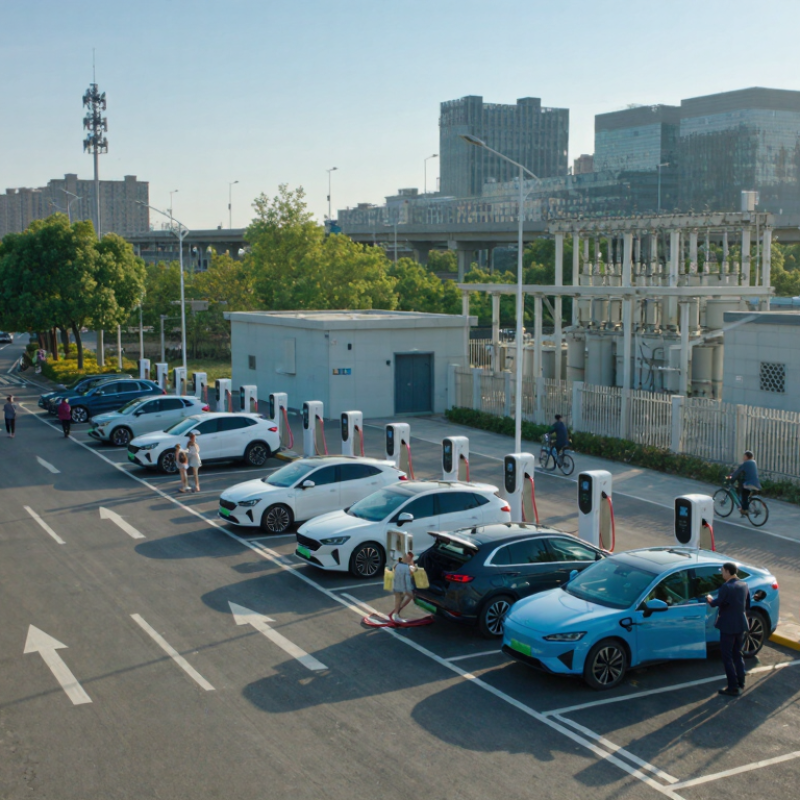
China’s charging demand is growing, but demand is not evenly distributed. The China Association of Automobile Manufacturers reported 9.5 million new-energy vehicle sales in 2023, representing 31.6% of new vehicle sales. The International Energy Agency recorded more than 14 million global electric car sales that year, with China contributing about 60%. These figures support ten practical location methods: map vehicle registrations, measure traffic flow, study parking duration, inspect apartment density, track fleet routes, identify highway gaps, compare charger occupancy, monitor peak demand, evaluate grid access, and test nearby competition.
Traffic counts alone can mislead. A busy road may produce few charging sessions if vehicles cannot park safely. Field teams should observe morning commutes, evening returns, weekend shopping, and holiday travel. The IEA’s Global EV Outlook 2024 notes that China holds more than half of the world’s public charging points. Yet a national average hides local shortages. A suburban housing cluster may need overnight charging, while a logistics corridor needs rapid daytime service.
Use anonymized mobility data, utility capacity checks, and interviews with drivers. Record queue length, failed sessions, parking turnover, and walking distance. Forecast three demand levels, not one. Forecasts will be wrong. That weakness matters. Recheck sites quarterly, especially after new housing, offices, or transit routes open. A technically perfect site can still fail when access is confusing, lighting is poor, or chargers sit behind a crowded entrance.
Charging station location planning in China should begin with daily travel, not empty land availability. Site teams can map apartment compounds, office clusters, schools, hospitals, shopping streets, and transport interchanges. They should measure traffic flow, parking duration, road access, and nearby electrical capacity. An accessible site needs clear entrances, safe turning space, lighting, and signs visible from the street. Convenience matters most during rain, late evenings, and crowded holiday periods. Small details matter.
A station near residential communities may support overnight charging, while workplace locations can serve longer daytime sessions. Sites near shopping centers, clinics, rail stations, and public services can capture varied demand throughout the day. Field interviews with residents, drivers, property managers, and local planners can reveal practical barriers. A narrow entrance may discourage larger vehicles. Poor lighting can reduce usage after sunset. These observations are often more useful than a simple map.
Data models can estimate demand, but early forecasts may still be wrong. Construction changes, seasonal travel, and limited parking can quickly alter results. Operators should test several nearby sites before making a long-term decision. A small pilot can expose queue times, cable reach problems, or confusing vehicle circulation. It is also worth reviewing accessibility for older drivers and people with mobility limitations. The best location is rarely the cheapest plot; it is the site people can reach easily, understand quickly, and use without unnecessary stress.
Optimizing charging station locations in China starts with evidence, not attractive roadside space.
A practical ten-factor screen should assess grid capacity, land cost, traffic flow, parking duration, nearby housing, commercial demand, flood risk, construction access, permitting time, and future expansion.
The International Energy Agency reported that China accounted for around 60% of global electric car sales in 2023.
That scale makes local electricity planning critical. A busy site can still fail if its transformer cannot support simultaneous fast charging.
Grid surveys should confirm available connection capacity, upgrade costs, cable distance, and peak-load restrictions. Land prices vary sharply between city centers, suburban corridors, and logistics zones. A cheaper plot may require longer cables, drainage work, or difficult road access.
The China Electric Vehicle Charging Infrastructure Promotion Alliance reported more than 2.7 million public charging piles in China by the end of 2023.
Competition is growing. Utilization matters more than visibility.
Tips
Measure demand in 15-minute intervals. Compare weekday and weekend loads. Leave space for additional chargers. Ask contractors for soil, drainage, and transformer estimates before signing land agreements.
A small pilot can expose weak assumptions. I would not trust traffic counts alone. Drivers may pass a site without stopping, especially when charging takes only fifteen minutes.
Construction feasibility often decides whether a promising location survives real-world testing.
A well-placed charging station begins with real parking behavior, not a map alone. Site teams should record vehicle arrivals, departure times, and peak occupancy across several weekdays. A supermarket may need moderate-power chargers for 45-minute visits. An office complex may favor overnight charging. The location must match the user’s actual dwell time.
Charger types should reflect both demand and available parking capacity. Fast chargers can serve taxis, delivery vehicles, and travelers who stop briefly. Standard AC chargers suit employees and residents who park for hours. Too many fast chargers may increase grid pressure and leave long-stay users waiting. Too many slow chargers may frustrate drivers with urgent travel needs. A mixed layout is usually more practical.
Clear circulation matters as much as electrical capacity. Reserve enough bays for charging without blocking ordinary parking or emergency access. Place longer-stay chargers near workplaces, hotels, and residential buildings. Put rapid chargers near entrances, but avoid creating traffic conflicts. Signs should show charger speed, bay rules, and expected charging time. Small details matter.
Field experience also exposes weak assumptions. A forecast may overestimate weekend demand or ignore winter charging losses. Regular reviews should compare energy use, queue times, failed sessions, and user feedback. Adjusting the layout later may be necessary. A perfect first plan is unlikely.
China’s fastest charging gains will come from better location decisions, not simply more hardware. The IEA’s Global EV Outlook 2024 reports over 4 million public charging points worldwide in 2023. China accounted for nearly two-thirds of them. That scale makes monitoring essential. A station beside an office tower may appear busy at noon, yet remain empty after 8 p.m.
Operators should review session starts, charging duration, energy delivered, queue time, and failed connections weekly. Separate weekday, weekend, holiday, and weather patterns. A practical dashboard can reveal whether three chargers serve morning commuters, delivery vehicles, or apartment residents. The difference matters. For example, repeated evening queues suggest a residential gap, while short daytime sessions may support a retail location. The U.S. National Renewable Energy Laboratory has repeatedly emphasized utilization, reliability, and access when evaluating charging infrastructure performance.
Location changes should follow measured evidence. Moveable equipment, temporary chargers, or revised parking controls can test demand before major construction. Track utilization for at least four to eight weeks, then compare it with nearby traffic, parking turnover, and grid capacity. A 15-minute interval may expose congestion hidden by daily averages. Keep failed sessions visible. Ignoring them creates misleading utilization rates.
Not every underused station is a mistake. Some locations provide resilience during emergencies or support future housing growth. Still, assumptions should be challenged. Data can be incomplete, and drivers may avoid a station because it feels unsafe or confusing. Continuous refinement requires field visits, driver feedback, and transparent maintenance records, not dashboards alone.
Start with daily travel patterns, not empty land. Study homes, offices, schools, hospitals, shops, and transport hubs. The best site is easy to reach and simple to understand.
Look for clear entrances, safe turning space, visible signs, and good lighting. Check access during rain, late evenings, and holiday crowds. Small details matter.
Residential areas may support overnight charging. Office districts can serve longer daytime sessions. Shopping streets and transport hubs may attract changing users throughout the day.
Confirm connection capacity, upgrade costs, cable distance, and peak-load limits. A busy location may fail when its transformer cannot support several chargers together.
Not always. A low-cost plot may need longer cables, drainage work, or difficult road access. Construction estimates should include soil, drainage, and transformer requirements.
A small pilot can reveal queues, cable-reach problems, and confusing vehicle movement. Temporary equipment or revised parking rules can test demand. Test before building.
Review session starts, charging duration, energy delivered, queue time, and failed connections each week. Compare weekdays, weekends, holidays, and weather conditions.
Track performance for at least four to eight weeks before major decisions. Use fifteen-minute intervals to expose hidden congestion. Daily averages can mislead.
It may show weak demand, poor lighting, confusing access, or unreliable equipment. However, some underused sites provide emergency resilience or support future housing growth. Assumptions need testing.
No. Drivers may pass a visible site without stopping, especially during short charging sessions. Combine traffic data with parking turnover, interviews, field visits, and grid capacity.
Optimizing electric vehicle charging station locations requires a practical, data-driven approach. The first step is to assess local EV demand, traffic patterns, travel habits, and existing charging gaps. Areas with growing EV adoption, frequent congestion, limited public charging, or long travel distances may offer strong opportunities. Locations should also be convenient and accessible, ideally near residential communities, workplaces, shopping areas, transit points, highways, and other popular destinations.
To determine how to optimize charging station locations, planners must evaluate grid capacity, connection requirements, land and operating costs, traffic access, parking availability, and construction conditions. A balanced mix of charging speeds and connector options should reflect local user needs, expected parking duration, and future demand. After installation, operators should monitor utilization, peak periods, waiting times, and customer behavior. Regularly reviewing this data allows station networks to be adjusted, expanded, or relocated, improving convenience, efficiency, and long-term financial performance.
Quantum Charge