Understanding why some chargers charge faster than others involves technical intricacies. According to Dr. Emily Carter, a leading expert in electrical engineering, “The power output defines how quickly a battery can be charged.” This statement underscores the significance of wattage and charge protocols.
Personal experiences often reveal this disparity. Some users plug in their devices, only to find they are still low on battery hours later. Different chargers exhibit varying performance, with factors ranging from voltage levels to compatibility playing a role. When considering a charger, it's essential to understand the specifications involved.
The charging process isn't as straightforward as one might think. Frustration can arise when users expect faster results without considering the power source. Evaluating why do some chargers charge faster than others can help users select better options. It's not about brand loyalty but about matching technology with user needs.
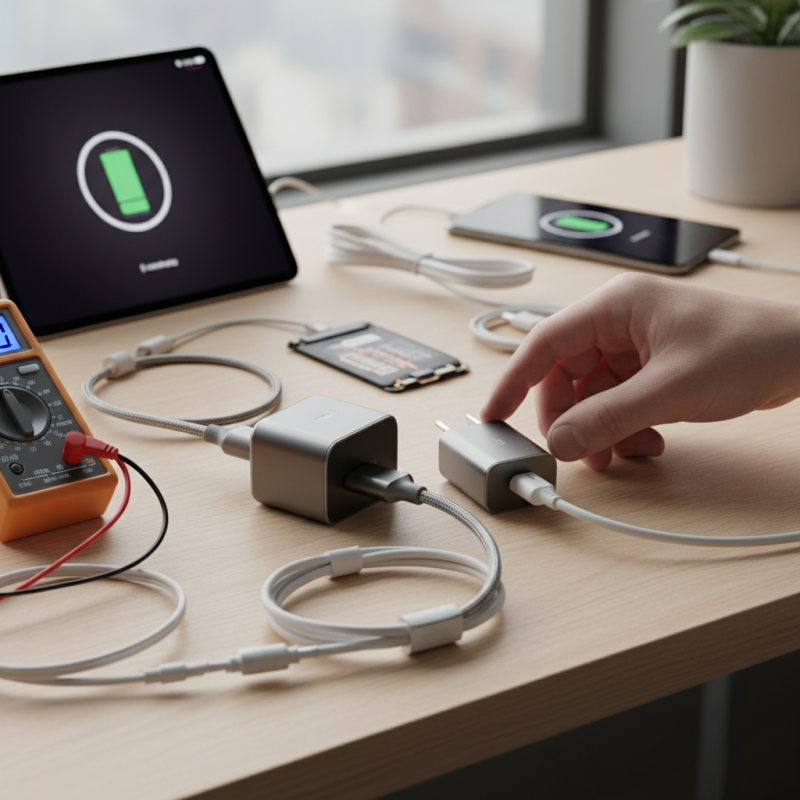
Charging speed is affected by both voltage and amperage. Voltage is the electrical force that pushes the current through the charger. Higher voltage can lead to faster charging, but it must be compatible with the device. Amperage, on the other hand, refers to the amount of current flowing. The higher the amperage, the quicker the device can recharge, provided the device supports it.
When choosing a charger, consider its output specifications. A charger with a higher output rating may promise faster charging, yet it must match your device’s requirements. Using an incompatible charger may lead to overheating or, worse, damage. It’s important to read the charging specifications of the device.
When it comes to chargers, not all are created equal. Understanding the types of chargers—standard, fast, and quick charging technologies—is crucial for maximizing device performance. Standard chargers typically provide 5V at 1-2A, resulting in a charging speed of around 5 to 10 watts. In contrast, fast chargers can deliver higher voltages and currents, offering up to 18 watts or more. Quick charging technologies, such as USB Power Delivery and Qualcomm's Quick Charge, can push that output even further, achieving speeds up to 100 watts under ideal conditions.
According to a recent industry report, devices using quick charging can recharge up to 80% in about 30 minutes. This remarkable efficiency can significantly reduce downtime. However, the compatibility of devices with these technologies varies widely. Not all devices support fast charging, so it’s essential to verify specifications before relying on these advanced chargers.
Tip: Always check your device’s charging capabilities. Misusing a fast charger can lead to unexpected heat generation.
Moreover, consider cable quality when charging. Higher-quality cables can improve charging efficiency and safety. Investing in well-made accessories ensures better performance.
Tip: Avoid using third-party cables with unknown specifications. They can damage your device or reduce efficiency.
When it comes to charging devices, various charging protocols significantly impact speed.
USB Power Delivery (USB-PD) is a popular protocol. It supports higher power levels, allowing devices to charge faster. Reports show that USB-PD can deliver up to 100 watts, drastically reducing charging time for laptops and other gadgets.
Quick Charge is another common protocol. It adjusts voltage and current to optimize charging speed for compatible devices. This protocol can charge a smartphone from 0% to 50% in just 15-20 minutes. However, its efficiency can vary based on the device’s battery health and usage patterns.
Tip: Always use the recommended charger for your device. Using a lower-rated charger may lead to prolonged charging times.
Charge speed is affected by cable quality, too. A poor-quality cable can slow down the process significantly, even if the charger is capable. Look for cables that support the charging protocol your device uses.
Tip: Invest in high-quality cables to ensure optimal performance. They may cost more upfront but can save you time and frustration in the long run.
When it comes to charging efficiency, cable quality is crucial. A high-quality cable minimizes resistance, which can drastically improve charging speeds. According to a study from the Institute of Electrical and Electronics Engineers (IEEE), a well-constructed cable can increase power delivery by as much as 30%. This efficiency is especially noticeable with devices that demand higher wattage for fast charging.
Compatibility also plays a significant role in charging performance. Not all cables and chargers work effectively together. For instance, using a low-quality cable with a high-output charger might lead to reduced speeds or unsafe charging conditions. Research from the Consumer Electronics Association (CEA) highlighted that over 40% of consumers experience slower charging due to mismatched cables and adapters. This mismatch can result in frustration and ultimately harms battery health.
Users must consider both cable quality and compatibility for optimal performance. Investing in a certified cable can prevent issues down the road. Some cables may look appealing but lack the necessary specifications for safe and efficient charging. Staying informed about these details can make a significant difference in charging experiences.
This chart illustrates the differences in charging speed based on cable quality. As seen, lower quality cables significantly decrease efficiency, while high-quality cables can deliver optimal performance for charging devices.
Charging speed depends largely on device limitations. Each device has specific hardware that dictates how much power it can receive. Factors like battery capacity and charging circuitry play crucial roles. A device’s battery chemistry also impacts charging speed. Lithium-ion batteries, for instance, can handle higher power levels, but other types may not.
Port types can affect how quickly a device charges. For example, USB-C supports faster charging compared to older USB standards. However, not all devices utilizing USB-C will charge quickly due to their internal circuitry. The age of a device also matters. Older models may lack the technology for rapid charging, leading to frustration.
Even the temperature can influence charging performance. Charging a device in extreme temperatures can hinder its ability to charge efficiently. Users should consider all these aspects when assessing why some chargers outpace others. A realization that not all devices are equal can lead to better charging practices and expectations.
| Charger Type | Output Power (W) | Charging Standard | Compatible Devices | Efficiency (%) |
|---|---|---|---|---|
| Standard Charger | 5 | USB 2.0 | Smartphones, Basic Devices | 70 |
| Fast Charger | 18 | Quick Charge 2.0 | High-End Smartphones | 85 |
| Super Fast Charger | 25 | Power Delivery | Latest Smartphones, Tablets | 90 |
| Wireless Charger | 10 | Qi Standard | Compatible Smartphones | 60 |
| Car Charger | 12 | Standard USB | Smartphones, GPS Devices | 75 |
: There are standard, fast, and quick charging technologies. Each has varying output levels and speed.
Quick charging can recharge devices up to 80% in about 30 minutes under ideal conditions.
No, compatibility varies widely. Always check device specifications to confirm support for fast charging.
Misusing a fast charger can generate unexpected heat, potentially damaging your device.
Higher-quality cables can enhance charging efficiency and safety. Investing in quality is crucial.
Older models often lack the technology for rapid charging, which can be frustrating for users.
Extreme temperatures can hinder a device’s ability to charge efficiently.
Device limitations, battery capacity, charging circuitry, and battery chemistry all affect charging speeds.
It's best to avoid third-party cables with unknown specs. They may damage your device or reduce efficiency.
Consider device type, charging technology, and environmental conditions that may influence performance.
In understanding why do some chargers charge faster than others, several critical factors come into play. The charging speed is significantly influenced by the voltage and amperage that a charger provides. Standard chargers typically deliver lower amperage, while fast and quick charging technologies can significantly increase these values, leading to quicker charging times. Additionally, different charge protocols, such as USB-PD and Quick Charge, dictate how power is communicated between the charger and device, further affecting efficiency.
Moreover, cable quality and compatibility are essential in optimizing charging performance. A high-quality cable can reduce resistance and ensure that the maximum current flows efficiently. However, device limitations also play a crucial role; the hardware in a device can cap the charging speed regardless of the charger used. Understanding these elements allows users to make informed decisions about their charging accessories and explains why some chargers are able to charge devices much faster than others.
Quantum Charge